Structured Invisalign Treatment Stages for Predictable Orthodontic Results
We apply Invisalign treatment stages through a clinically structured, digitally controlled orthodontic protocol designed to deliver predictable tooth movement, functional bite correction, and long-term stability. Invisalign treatment is not a single procedure; it is a multi-stage orthodontic process where each phase builds precisely on the previous one. Skipping, compressing, or poorly executing any stage compromises the final outcome.
Below is a complete, stage-by-stage breakdown of Invisalign treatment, structured for accuracy, efficiency, and measurable results.
Stage 1: Comprehensive Orthodontic Evaluation
The Invisalign process begins with a detailed orthodontic assessment. At this stage, we analyze the entire oral system, not just tooth alignment.
Clinical evaluation includes:
Tooth position and rotation analysis
Bite relationship (overbite, underbite, crossbite, open bite)
Jaw alignment and functional symmetry
Tooth wear patterns
Periodontal health status
This stage establishes whether Invisalign is suitable and defines the scope of correction required.
Stage 2: Digital Intraoral Scanning and Data Collection
Traditional impressions are replaced with high-precision digital intraoral scans. This stage captures exact three-dimensional data of the teeth and bite.
Digital records include:
3D dental arches
Occlusal relationships
Tooth size and spacing metrics
These scans form the foundation for the entire Invisalign treatment plan. Accuracy at this stage determines accuracy at every subsequent stage.
Stage 3: Digital Treatment Planning (ClinCheck Simulation)
Using collected data, a full digital orthodontic simulation is created. This is the most critical stage of Invisalign treatment.
The digital plan defines:
Direction of tooth movement
Amount of movement per aligner
Rotation, intrusion, extrusion, and tipping values
Bite correction sequencing
Total number of aligners
Every tooth movement is calculated in advance. There is no improvisation during active treatment.
Stage 4: Treatment Plan Finalization and Approval
Before aligners are manufactured, the full digital plan is reviewed and finalized. This stage ensures:
Functional bite correction
Symmetrical tooth alignment
Biological force limits are respected
Once approved, the digital plan is locked. This becomes the blueprint for aligner production.
Stage 5: Custom Invisalign Aligner Fabrication
Based on the finalized plan, a series of custom Invisalign aligners is manufactured. Each aligner represents a single step in the orthodontic movement sequence.
Aligners are:
Made from medical-grade thermoplastic
Precisely trimmed for comfort and retention
Engineered for controlled force application
Each aligner builds on the previous one, progressing teeth toward the final alignment.
Stage 6: Placement of Attachments (If Required)
Many Invisalign cases require tooth-colored attachments bonded to specific teeth. These attachments act as biomechanical anchors.
Attachments enable:
Complex rotations
Vertical tooth movements
Root torque control
They are discreet, temporary, and removed at the end of treatment.
Stage 7: Active Aligner Wear Phase
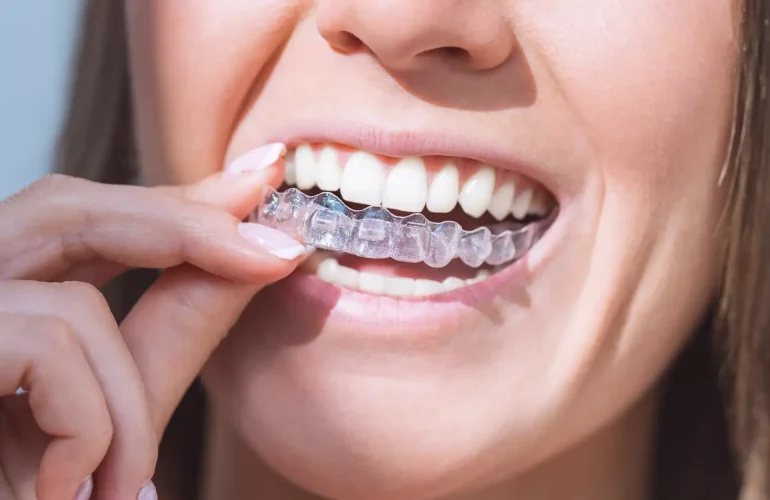
This is the longest stage of Invisalign treatment. Patients wear each aligner for 7 to 14 days, depending on the treatment protocol.
Key requirements:
20–22 hours of daily wear
Removal only for eating and oral hygiene
Sequential progression through aligners
Consistent wear is mandatory. Irregular usage disrupts planned tooth movement.
Stage 8: Periodic Clinical Monitoring
During active treatment, regular check-ups are scheduled to ensure:
Aligners fit correctly
Tooth movement follows the digital plan
No biological complications develop
Adjustments are made only when clinically necessary. The goal is to maintain alignment with the original treatment simulation.
Stage 9: Mid-Treatment Refinement (If Needed)
Some cases require refinement aligners. This stage addresses:
Minor residual rotations
Bite fine-tuning
Final spacing adjustments
Refinement is not failure; it is a precision optimization step to achieve the planned result.
Stage 10: Completion of Active Invisalign Treatment
Once all planned movements are achieved, the active aligner phase ends. At this point:
Teeth are fully aligned
Bite relationships are corrected
Functional balance is established
Attachments are removed, and the final result is evaluated.
Stage 11: Retention Phase After Invisalign
Orthodontic movement requires stabilization. The retention stage is mandatory.
Retention includes:
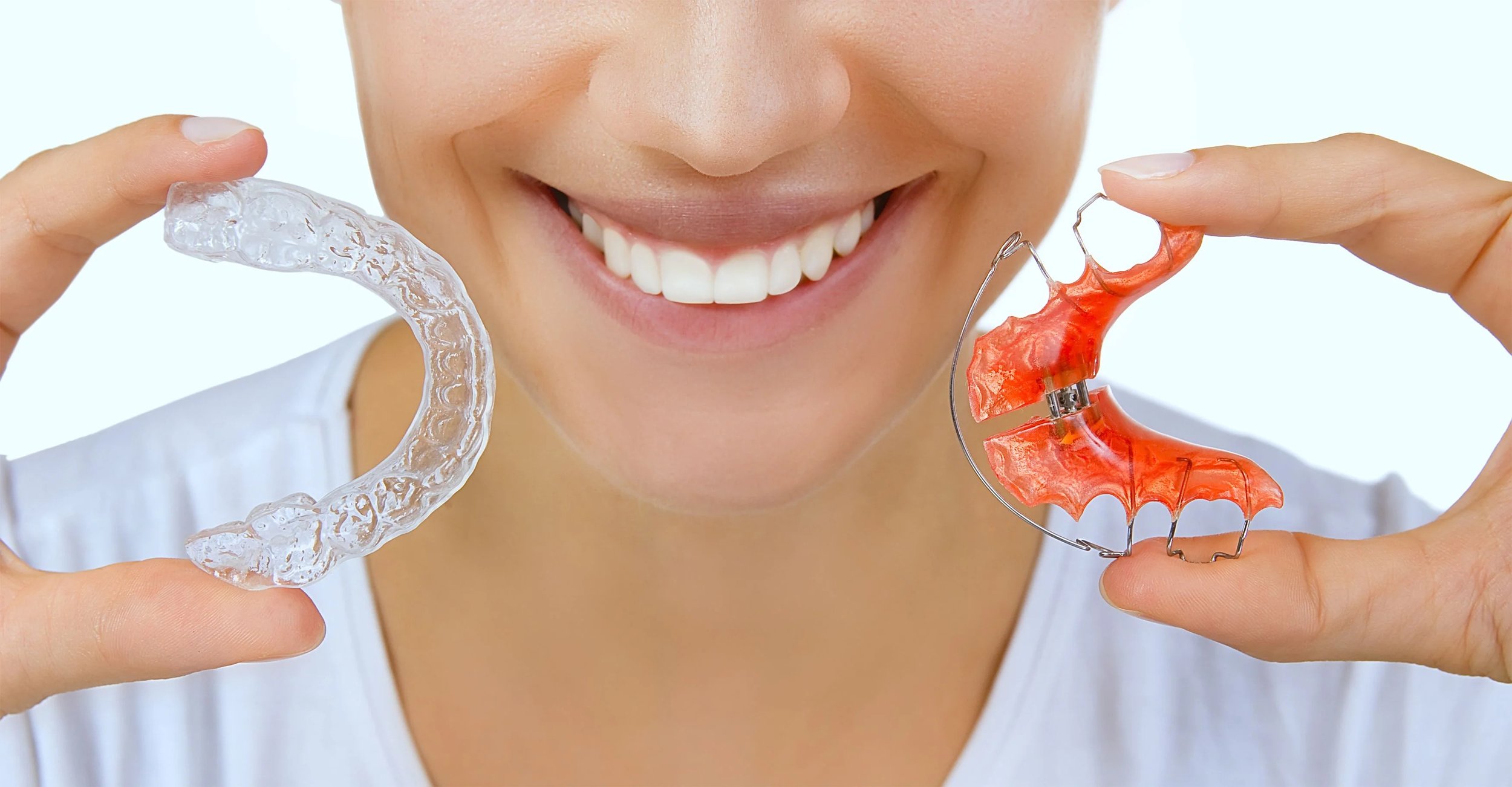
Clear retainers
Night-time wear protocols
Long-term monitoring
Without retention, relapse is inevitable. Stability defines treatment success.
Treatment Duration Across Invisalign Stages
Total Invisalign treatment time varies based on:
Case complexity
Number of aligners
Biological response
Patient compliance
Typical duration ranges from 6 to 18 months, including refinement and retention transition.
Bite Correction Throughout Invisalign Stages
Invisalign treatment stages are not limited to straightening teeth. Bite correction is addressed progressively:
Early aligners initiate alignment
Mid-stage aligners correct occlusion
Final aligners refine bite balance
Functional stability is achieved alongside aesthetic alignment.
Oral Hygiene During Invisalign Treatment Stages
Clear aligners allow superior hygiene compared to fixed braces. Throughout all stages:
Teeth can be brushed normally
Flossing remains uninterrupted
Risk of plaque accumulation is reduced
Proper hygiene supports healthy tooth movement.
Speech and Comfort Adaptation Stages
Initial adaptation occurs during the first few aligners. Minor pressure or speech changes may occur but resolve quickly.
Aligners are engineered for:
Smooth edges
Minimal tongue interference
Comfortable long-term wear
Comfort improves as treatment progresses.
Clinical Discipline Defines Invisalign Success
Each Invisalign stage serves a specific clinical function. Skipping steps, shortening wear time, or ignoring refinements compromises outcomes.
Successful Invisalign treatment depends on:
Accurate planning
Sequential execution
Patient compliance
Structured retention
Orthodontic alignment is a controlled medical process, not a cosmetic shortcut.
Invisalign Treatment Stages as a Complete Orthodontic System
Invisalign treatment stages form a closed-loop orthodontic system where planning, execution, monitoring, and stabilization operate as a single process. When each stage is executed precisely, results are predictable, stable, and functionally sound.