

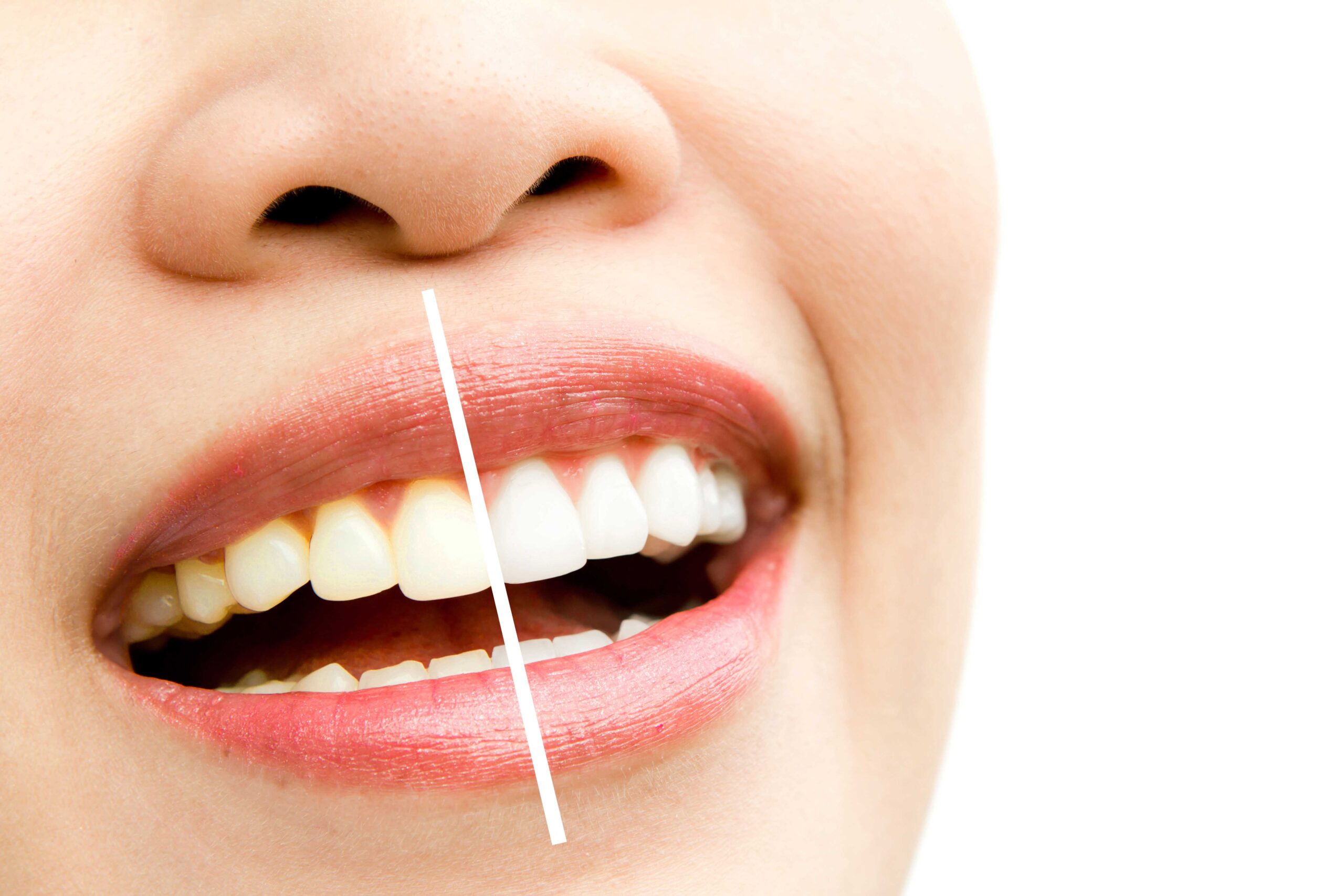
Professional Tooth Whitening for Noticeably Brighter Teeth
We provide tooth whitening (bleaching) as a controlled, professional dental procedure designed to safely lighten tooth color, remove deep discoloration, and restore natural brightness. Tooth whitening is not a cosmetic shortcut; it is a clinically regulated dental treatment that requires correct diagnosis, appropriate technique selection, and precise material use to achieve stable and uniform results.
Modern bleaching protocols allow predictable shade improvement while preserving enamel integrity and tooth sensitivity balance.
What Is Tooth Whitening (Bleaching)?
Tooth whitening, also known as dental bleaching, is a treatment that lightens the color of teeth by breaking down stain molecules within the enamel and dentin layers. The process does not damage the tooth structure when applied under professional supervision.
Bleaching targets:
Intrinsic discoloration (internal staining)
Extrinsic discoloration (surface staining)
Age-related tooth darkening
Lifestyle-related stains
The result is a cleaner, brighter, and more uniform tooth shade.
Causes of Tooth Discoloration
Tooth discoloration develops due to multiple factors, including:
Coffee, tea, and red wine consumption
Tobacco use
Aging-related enamel thinning
Certain medications
Inadequate oral hygiene
Genetic enamel characteristics
Effective tooth whitening begins with identifying the type and depth of discoloration.
Types of Tooth Whitening Treatments
Professional In-Office Tooth Whitening
In-office bleaching delivers the most immediate and controlled results.
Key characteristics:
High-concentration whitening agents
Protective isolation of gums
Controlled activation protocols
Immediate shade improvement
This method achieves significant whitening in a single session.
At-Home Tooth Whitening with Custom Trays
Custom tray bleaching offers gradual whitening under professional guidance.
Features include:
Individually fabricated whitening trays
Lower-concentration bleaching agents
Controlled daily usage
Progressive shade enhancement
This approach allows flexibility while maintaining clinical safety.
Combined Tooth Whitening Protocols
For optimal results, combined whitening treatments may be used.
This includes:
Initial in-office bleaching
Follow-up at-home whitening
Long-term shade stabilization
Combined protocols maximize brightness while minimizing sensitivity.
How Tooth Whitening Works
Bleaching agents penetrate enamel and dentin to break down stain compounds.
The process involves:
Oxygen release
Molecular stain oxidation
Lightening of tooth pigments
Properly regulated whitening ensures even color distribution without structural damage.
Tooth Whitening Materials and Agents
Professional whitening uses clinically approved materials, including:
Hydrogen peroxide
Carbamide peroxide
Enamel-protective additives
Desensitizing compounds
Material selection depends on tooth condition, sensitivity level, and target shade.
Tooth Whitening Procedure Step by Step
Clinical Evaluation
Before whitening, we assess:
Tooth and gum health
Existing restorations
Enamel thickness
Sensitivity risk
Only suitable candidates proceed to bleaching.
Pre-Whitening Cleaning
Professional cleaning removes surface plaque and calculus, allowing even bleaching agent penetration.
Isolation and Protection
Gums and soft tissues are isolated to prevent irritation during bleaching.
Bleaching Application
Whitening gel is applied in controlled cycles, ensuring uniform exposure and shade consistency.
Post-Treatment Assessment
Final shade evaluation and sensitivity monitoring complete the session.
Tooth Sensitivity and Whitening
Temporary sensitivity may occur during or after bleaching.
Management includes:
Desensitizing agents
Modified treatment duration
Post-whitening care protocols
Proper technique minimizes discomfort and preserves comfort.
Whitening Results and Shade Longevity
Tooth whitening results vary based on:
Initial tooth color
Lifestyle habits
Oral hygiene practices
Results typically last 12 to 36 months with proper maintenance.
Maintenance After Tooth Whitening
To prolong results:
Avoid staining foods initially
Maintain daily oral hygiene
Schedule periodic professional cleanings
Use whitening-friendly toothpaste
Maintenance preserves brightness and color stability.
Tooth Whitening and Existing Dental Restorations
Bleaching affects natural tooth structure only.
Restorations such as:
Crowns
Veneers
Fillings
do not change color and may require adjustment after whitening for shade harmony.
Safety of Professional Tooth Whitening
Professionally supervised bleaching is safe and controlled.
Clinical protocols prevent:
Enamel erosion
Gum irritation
Long-term sensitivity
Unregulated whitening methods increase risk and reduce predictability.
Who Is Suitable for Tooth Whitening
Ideal candidates include individuals with:
Healthy teeth and gums
Natural tooth discoloration
Realistic shade expectations
Whitening suitability is determined through clinical evaluation.
Tooth Whitening vs Over-the-Counter Products
Professional whitening provides:
Higher effectiveness
Controlled application
Reduced sensitivity risk
Predictable outcomes
Over-the-counter products lack precision and consistency.
Aesthetic Impact of Tooth Whitening
Whiter teeth enhance:
Smile brightness
Facial harmony
Overall appearance
Tooth whitening is one of the most effective aesthetic dental treatments when performed correctly.
Tooth Whitening as a Clinical Dental Procedure
Tooth whitening is not cosmetic improvisation. It is a medically supervised dental treatment requiring accurate diagnosis, material selection, and controlled execution.
When properly performed, bleaching restores tooth brightness without compromising oral health.